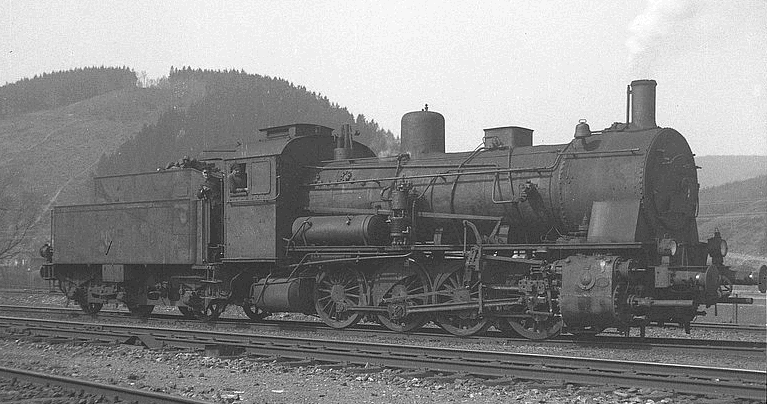
Building a DB BR55 0-8-0
55.1666 stands in the yard at Finnentrop on 12/4/46. This is one of the earlier BR55s which were slightly different in appearance to the model I am intending to build. Photo by G.E.Rabone
Some time ago I started to construct a model of a DB BR94 0-10-0 shunting tank locomotive. For various reasons, mainly because the chassis continually derailed on my sharp curves, I decided to abandon the project. However, this left me with a set of Scalelink driving wheels. The problem with the 0-10-0T was largely because of the length of the wheelbase.
Another possible model was the BR55 0-8-0 tender locomotive.
These had a wheelbase slightly shorter than the BR86 2-8-2T that successfully runs on my layout. Perhaps the BR55 would.
These were former Prussian railways locomotives with an incredible 5,155 being built between 1913 and 1921.
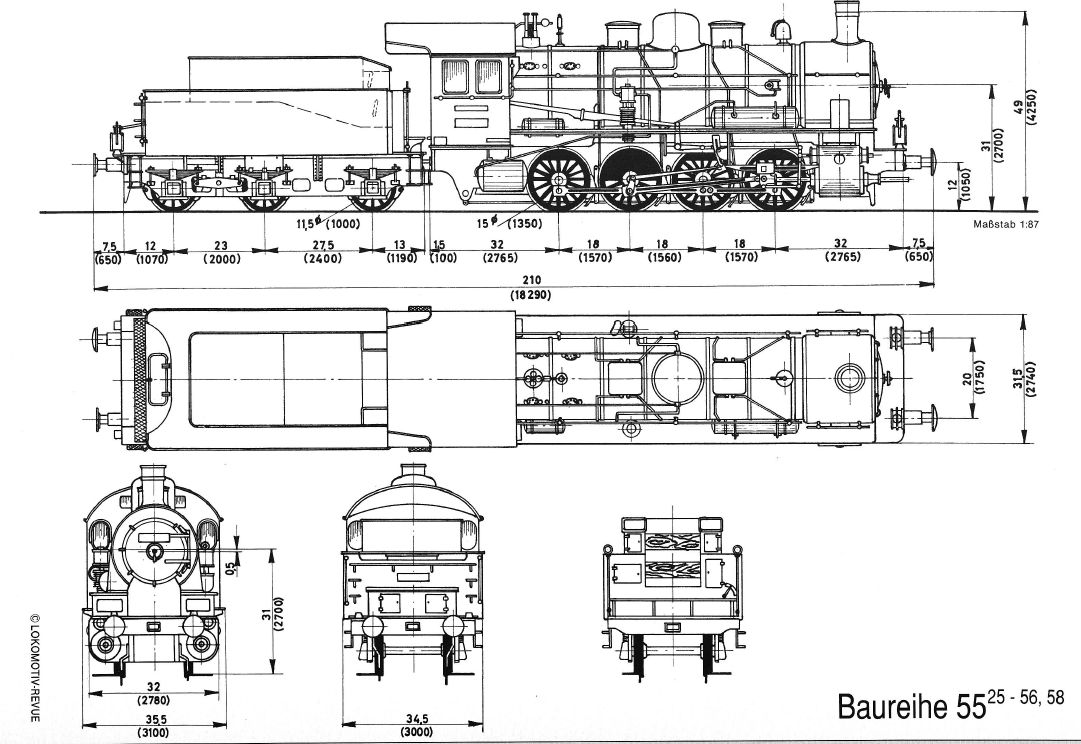
The diagram below comes from a long out of print book about the locomotive type. Some of the BR55s were still in use on my early visits to Germany, the last being withdrawn at the end of 1972
As I was out of stock of the thickness of brass sheet I use for chassis I decided to reuse the chassis from the aborted BR 94. This meant plug the original axle holes with solder but as I was unsure whether I could get the chassis to work properly I wasn't inclined to spend unnecessary cash and would accept the extra work involved.
Construction follows the same method used for my other German locomotives.
A drawing resized to S Scale is glued to the brass sheet. A sharp compass point is pressed through the axle centre mark on the diagram to mark the drilling points on the brass. The holes are then drilled using a very small diameter drill. The two sheets of brass to form the side frames are then tack soldered together and the holes are drilled through the second frame. Once this has been done I separate the two side frames and progressively enlarge the holes using drills and then broaches to enable 1/8 inch diameter top hat bearings to be inserted.
The frame sides are very flexible at this stage so I then solder strips of copperclad sleeper strips along the top edges of the frames and also soldered lengths of nickel silver along the bottom edge just below the axle holes.
The frames are then assembled with nickel silver frame spacers taken from spare Alan Gibson etchings. The frames are held in alignment using some old London Road alignment bolts and spacers.
I've now soldered representations of the brake hangers and brake blocks directly to the frames rather than my usual method of hanging them on crosswires - these won't be in alignment to the wheels but will give the impression when viewed on the layout.
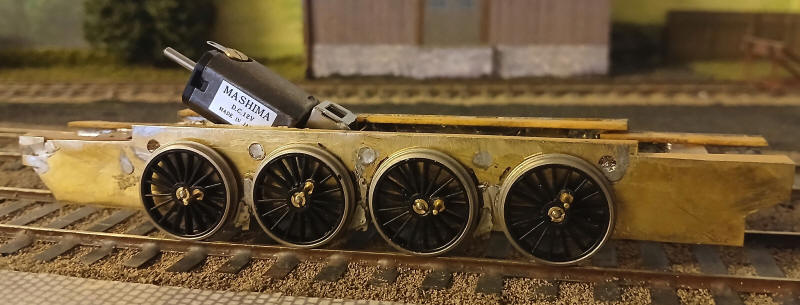
The photo shows the motor and wheels temporarily in place.
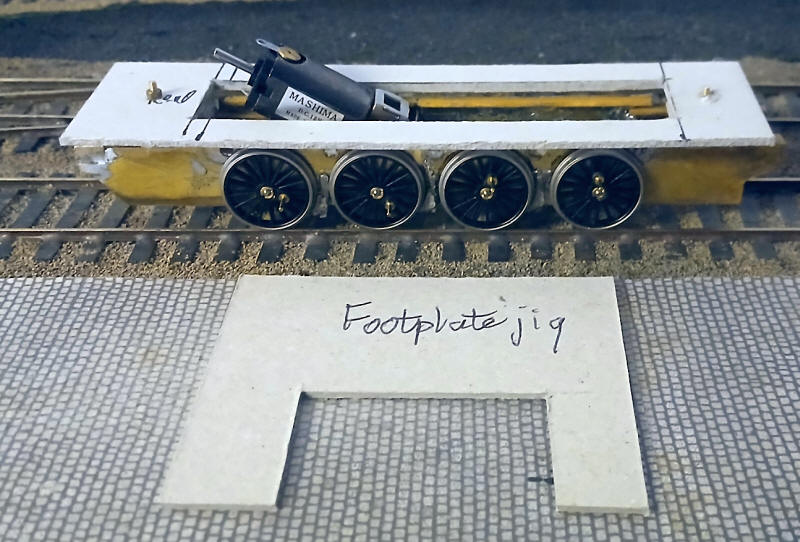
Before I move on to try to make a working chassis I've decided to make the footplate on to which the boiler and cab will be added. The basis of this is a piece of 2mm thick greyboard with a slot cut in the middle to accommodate the motor and to allow a view under the boiler. The footplate has blocks of card underneath the ends which sit on the frames. The footplate height jig can be seen - this ensures that the footplate is at the correct height relative to the rail head.
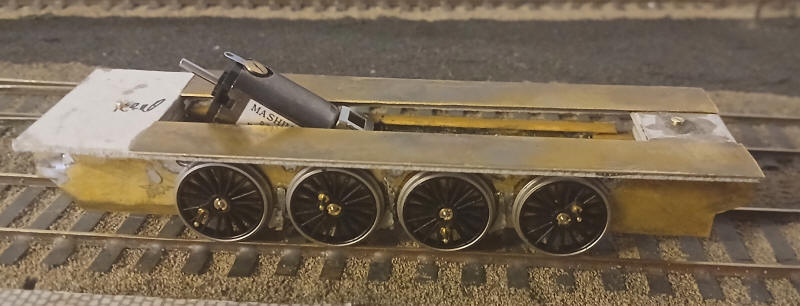
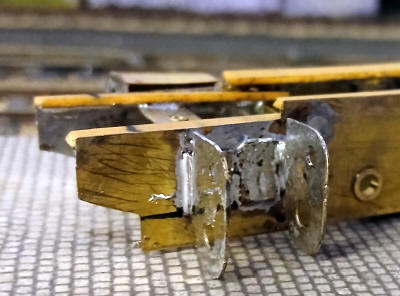
I've now added strips of brass for the footplate. These will make the card base much more rigid. Bolts have been secured through the holes in the card and these pass through the holes in the frame spacers at the front and rear of the chassis.
 |
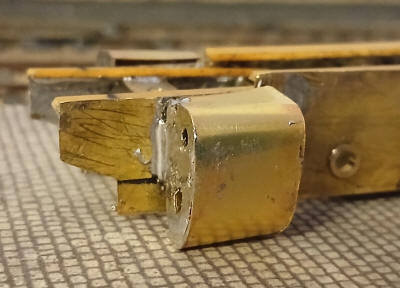 |
The next step was to add the cylinders. Rather than cutting metal from sheet I used part of the nickel silver etching from an Alan Gibson LMS 'Crab' 2-6-0 kit. The etchings comprises a fairly complex etch with the front and rear faces of the cylinder linked together with a chassis spacer. By cutting these into separate pieces for the front and rear of each cylinder and bending part of the frame spacer at right angles to form a tab four near perfect sized parts were obtained.
The exact position was marked out bearing in mind that the main piston rod on the BR55 loco is exactly in line with the axle centres. Once the front and rear cylinder faces were soldered to the main frames a piece of thin brass sheet was cut to size and soldered on to the edges of the cylinder faces.
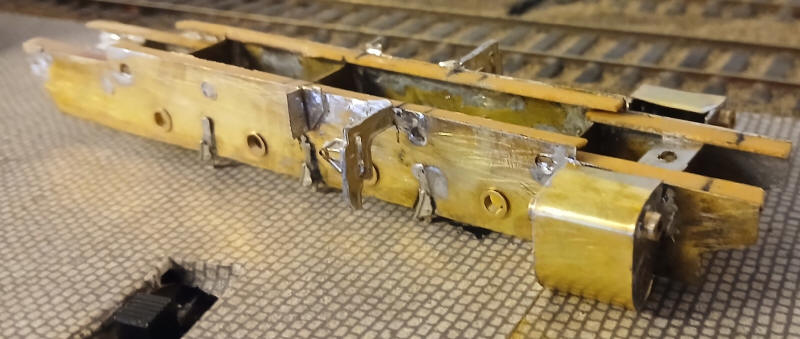
The motion brackets have now been added. The front brackets have been made out of the nickel silver etches from a Alan Gibson Stanier 2-6-4T which are incredibly similar to those found on the BR55. Each bracket is fabricated from four parts soldered together and then the end nearest the frame is bent at right angles and soldered to the frame . The rear bracket is a simple rectangle folded into an L shape and soldered to the frame 20mm to the rear of the main motion support bracket.
Some wagon top hat bearings have been soldered to the holes in the cylinders to act as either the guides for the piston rod or to represent other parts of the cylinders.
The frames are now ready to be painted in a reddish brown primer.
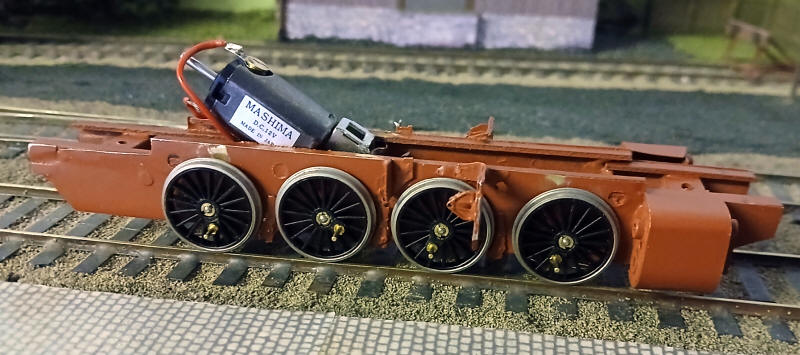
The wheels have now been secured in what I hope will be their final fitting. The motor has been wired up to the pick up strips on the underside of the chassis.
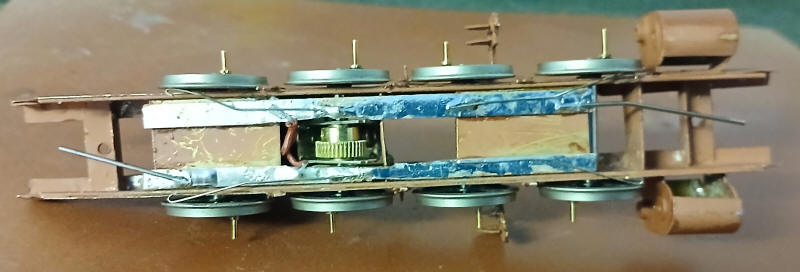
These are simply lengths of copper clad sleeper strip which have been glued to the two large horizontal frame spacer strips.
In a departure from what I have done for previous locomotives I have already added some pickup wires on the leading and rear driving wheels. In addition I have soldered two lengths of nickel silver wire to the copper clad strips , one at each end. These will allow easy testing of the loco by clipping the crocodile clips of the jumper leads I use for electrical testing.
A big problem
Having got this far the next step was to attach the coupling rods which I had already assembled using a simple jig as described in the sections about other DB steam locos. I test fitted the rods holding them in place with short lengths of the plastic insulation sleeves from ordinary domestic 3 core wire. The model ran smoothly. Then I started to solder the washers in place over the crankpins and it was immediately obvious that the melting point of the plastic that Scalelink use is considerably lower than Alan Gibson's' wheels. Despite taking great care two of the crankpins move their alignment and the model no longer ran smoothly.
Rather than give up on the project I managed to obtain some similar old Rumford wheels on Ebay and after removing the wheels and rods I reassembled the chassis as seen below.
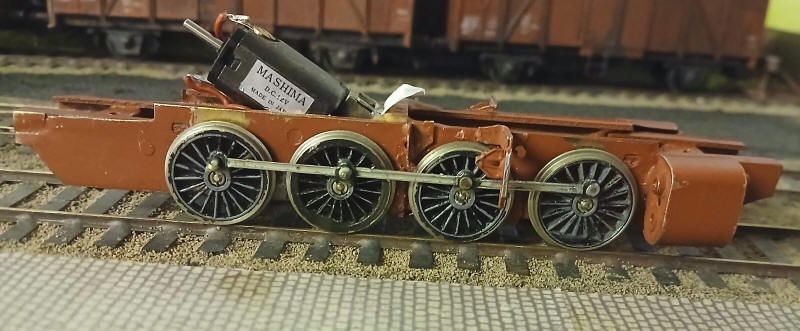
The building of the valve gear is the next step but I will wait until I am properly motivated to continue!

The first part of the valve gear construction is the slidebar. This was made from a length of nickel silver strip about 1.5mm wide which was folded in half and the two legs solder together to make it stronger. The end 5mm was then bent at right angles and this was then soldered to the end face of the cylinder directly above the hole for the piston rod. At this stage the slide bar has not been soldered to the motion bracket to allow the crosshead and connecting rod to be slid into place.

I've jumped on many stages in the construction of the valve gear as I have covered this in the descriptions of the other German steam locos I have built. Basically, the majority of the parts have come from some spare Gibson chassis nickel silver etches from LMS locomotives such as the Crabs, the 2-6-4Ts and even Somerset and Dorset 2-8-0s . Some parts have been used as they came but others have been lengthened by splicing two parts together. The result in its raw state is not particularly attractive but once painted and weathered things will look much better. And of course the essential thing is that the chassis runs smoothly and the valve gear moves correctly.
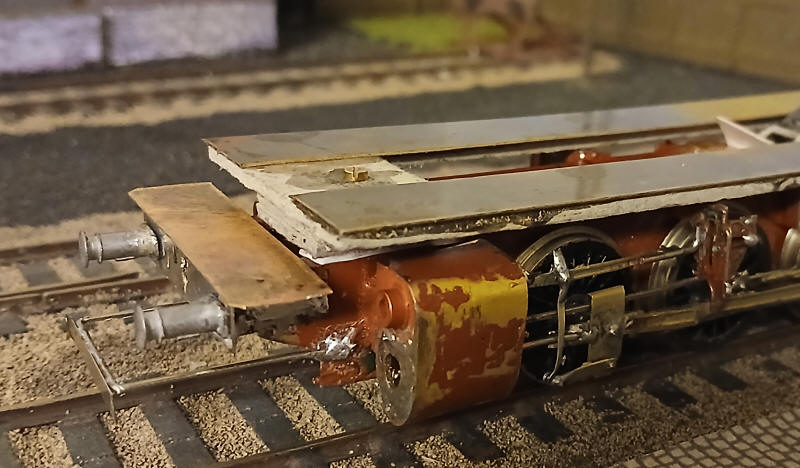
After a break whilst I completed the BR515 railcar I've returned to the BR55. In this photo I've added the lower footplate at the front end with the buffer beam and white metal buffers. The coupling bar has a nickel silver buffing plate soldered to a U shaped nickel silver wire which has been soldered to the main frames just in front of the cylinders.
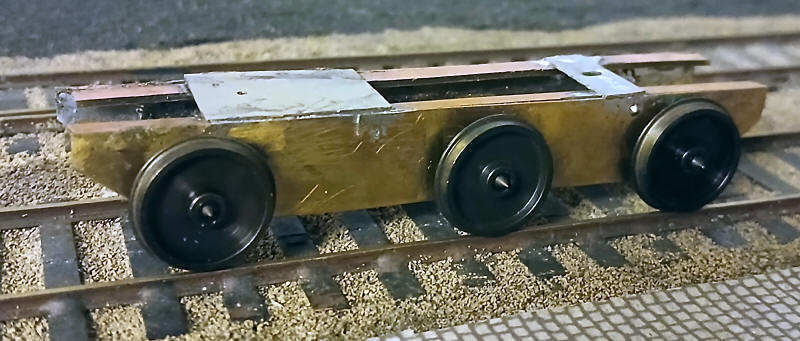
The BR55 had short tenders with an asymmetrical wheelbase. I cut out the two side frames using my standard method of drawing out the frames on paper with the wheel centres parked on it. The paper was glued to an offcut of a sheet of brass. This was then tack soldered to another piece of brass and a compass point used to accurately mark the wheel centres. This was used as the starting point for drilling progressively increasing in size. Eventually I moved on to using broaches to open up the holes to about 1/8th inch take the bearings for the 2mm diameter axles.
The brass sheets were the unsoldered and the hole for the centre axle was elongated so that the wheel set could move up and down to allow for track irregularities. A length of copper clad sleeper strip was soldered in place at the top of each frame side. The frames were assembled using my London Road alignment jigs and two S Scale frame spacers from old Alan Gibson loco kits were soldered across the top of the frames. The bearings were soldered in place and the 16mm diameter wheels added. The wheels didn't sit perfectly on a flat surface but a bit of gentle twisting of the frames sorted that out before additional frame spacers were added to make the chassis rigid.
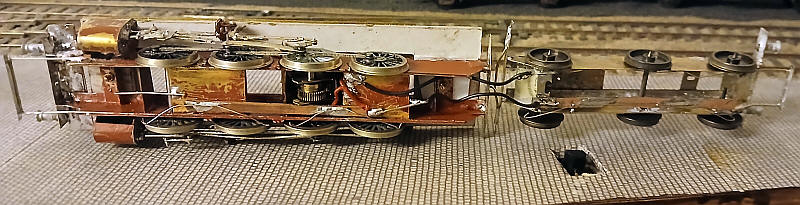
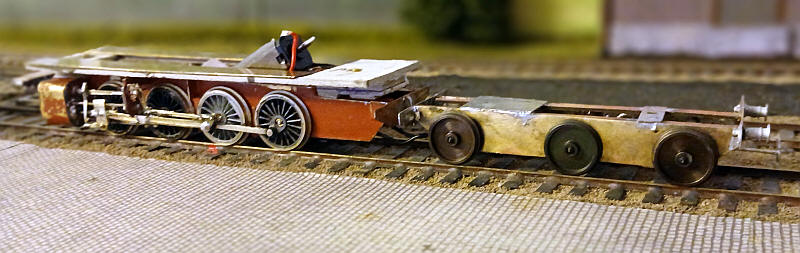
The loco is now complete mechanically and electrically. Pick up wires have been added to the tender and linked to the locomotive. A rear buffer beam has been added together with the rear coupling bar. Testing shows that the loco runs well and will perform its intended task pulling the local freight train to Niederwangen. Now the tender and loco chassis needs painting before moving on the loco and tender bodies.
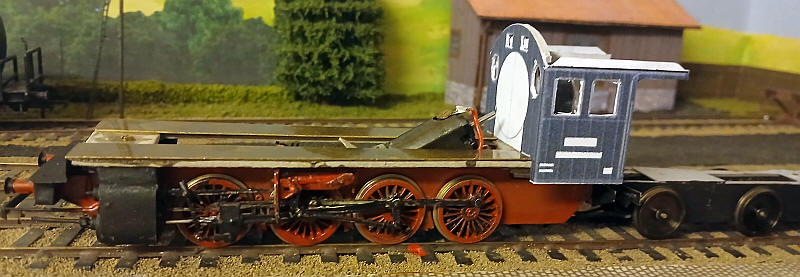
I've now painted the loco chassis although the wheels still need their balance weights adding.
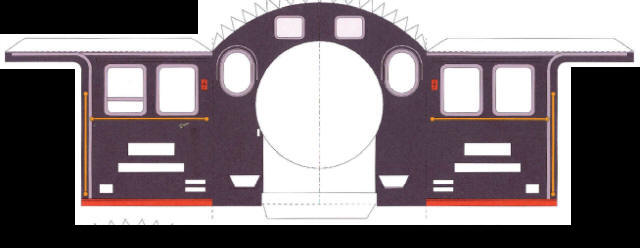
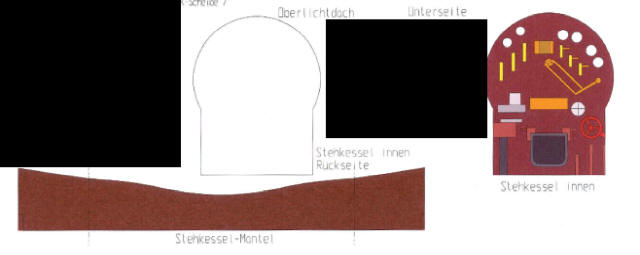
I've also started on the loco body using the pdf produced by Albricht Pirling. These have been resized from 1:38 to 1:64 scale. The cab has been assembled and strengthened internally and also the firebox/ backhead of the boiler is in place.
At this point I changed my mind about the wheels in the tender. The real tender had spoked wheels whilst I had planned to use Romford/ Markits disc wheels. So I changed the wheels to Gibson spoked wheels. However, it became obvious that the tender would be very prone to derailment on certain sections of the track in the station.
A rethink was necessary.
A new tender chassis design
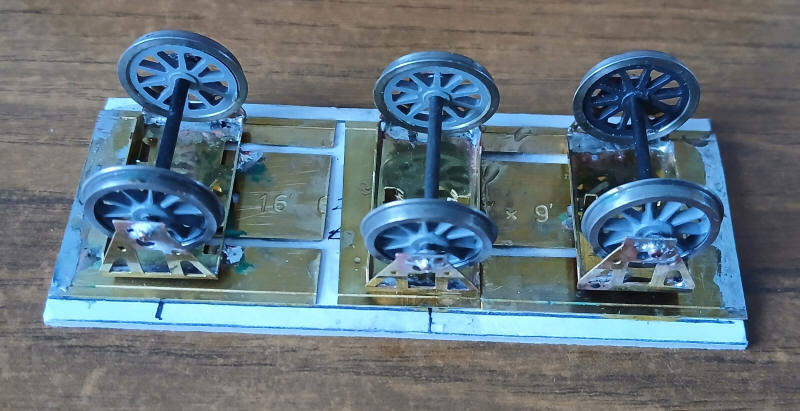
I've now assembled a new tender chassis which uses a thick piece of greyboard onto which I have glued the rocking W irons that are designed for British wagon chassis. The axle on the right is a fixed axle whilst the middle and right axles are free to rock.
In order to get the larger tender wheels (16mm diameter) instead of the smaller wagon wheels (about 14mm diameter) to fit I have repositioned the bearings by opening up a hole in the slot at the bottom edge of the W iron with broaches and then soldering the pin point bearings in place.
The chassis now runs perfectly smoothly through the less than perfect track on Niederwangen!
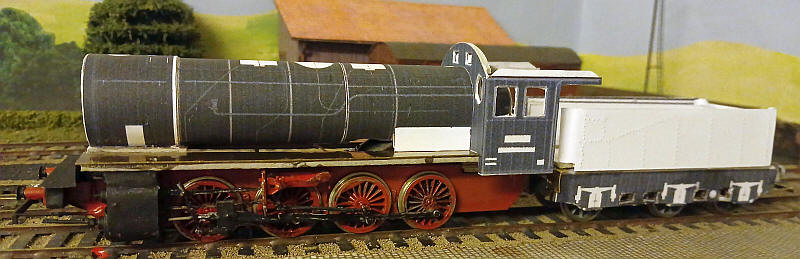
I've now moved on to the more cosmetic parts of construction.
The locomotive's boiler has now been fitted to the cab and footplate. I sued a length of card tube which was just a little smaller than the correct diameter. I've built this up to correct diameter using printouts from the Pirling BR 55 "kit". A slot was cut out of the firebox end of the boiler and a vertical piece of plain card added to the side of the firebox to represent this. The front of the motor is just visible - I think I will be able to disguise this better in due course.
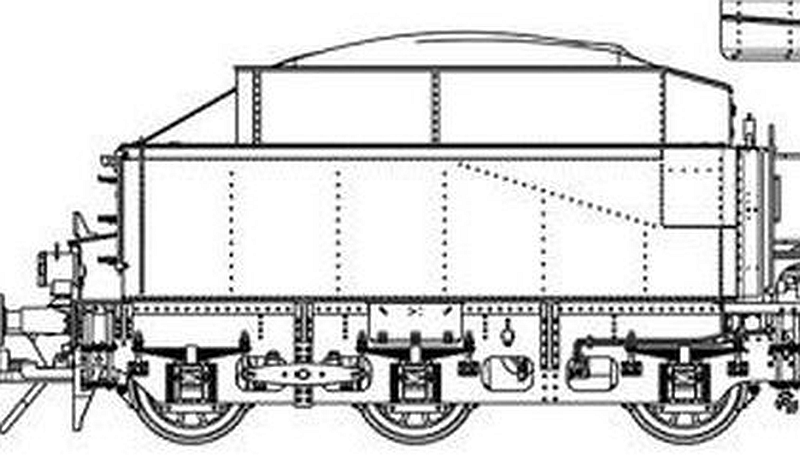
Rather than use the tender sides from the pdf "kit" I've printed out a more accurate diagram which shows the distinctive pattern of rivets on the sides.
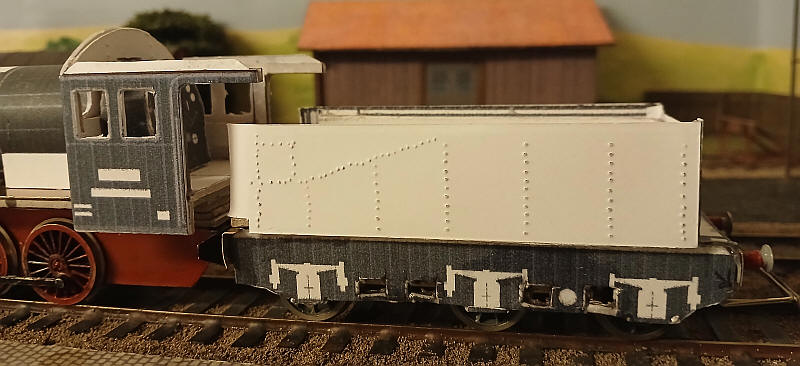
I printed out two sides (one a mirror image of the other) and used a compass point to break through the card. Once painted this should give a reasonable impression of the rivets. This thin card was glued to some mounting board and together with the rear end of the tender body glued to the mounting board. The chassis sides were cut from the kit and glued to thick mountiing board before cutting out the holes.
The buffer beam and front drag beam were folded up into an inverted L shape from a sheet of thin brass and glued to the mounting board that supports the rocking w irons.
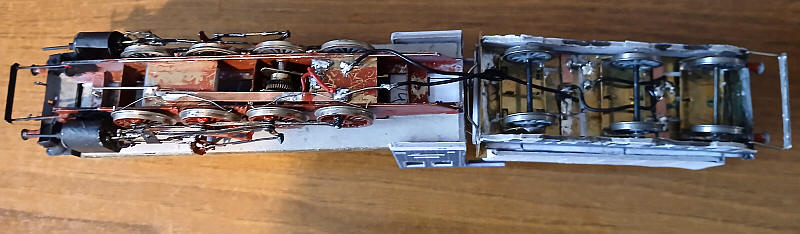
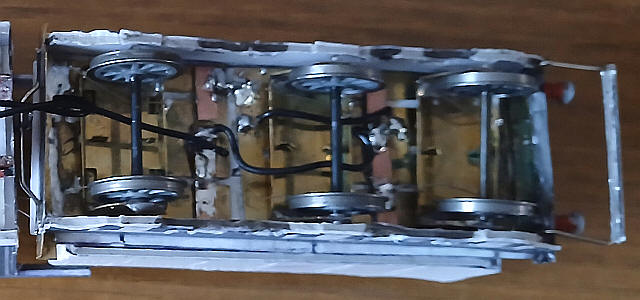
I was determined to have all-wheel pickup on this loco and the photo shows how I arranged this. The leading axle is fixed whilst the second and third axles are rocking. The wheels at the top of the tender in the photo will be live to the chassis so nickel silver pickup wires are soldered directly to all three w irons which are therefore permanently live and are connected by lengths of insulated wire to the locomotive.
The wheels at the bottom of the photo have their pick up wires soldered to the lengths of copperclad strip. The pick up wires have been bent so that they do not come into contact with the live w Irons and cause a short circuit. These are then connected to the loco by more lengths of insulated wire.
The loco now runs noticeably more smoothly and without stalling on sections of dirty track.
The arrangements for the front an rear coupling bars can also be seen.
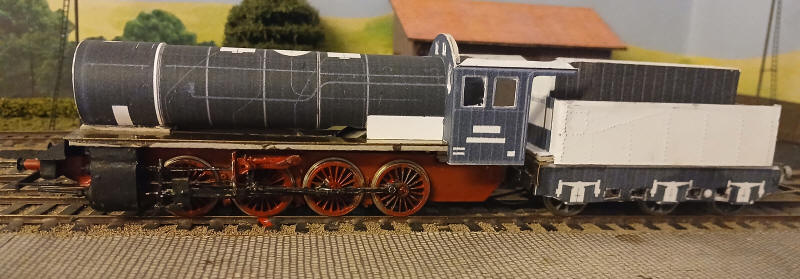
The tender body has now had its front and coal bunker added.